DIP & through-hole
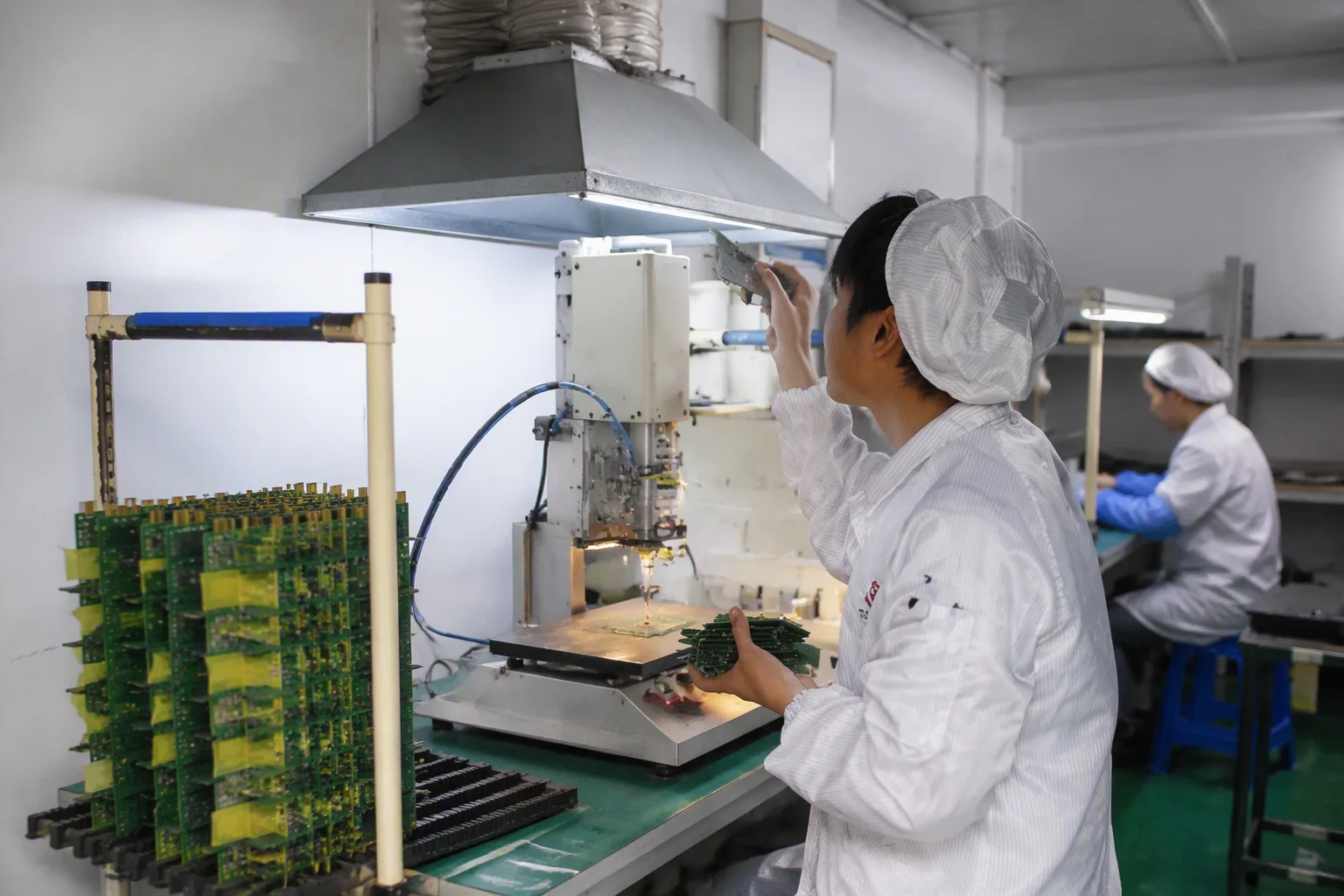
2 lines: wave soldering for volume and selective soldering for mixed boards with heat-sensitive parts. Hand soldering follows J-STD-001.
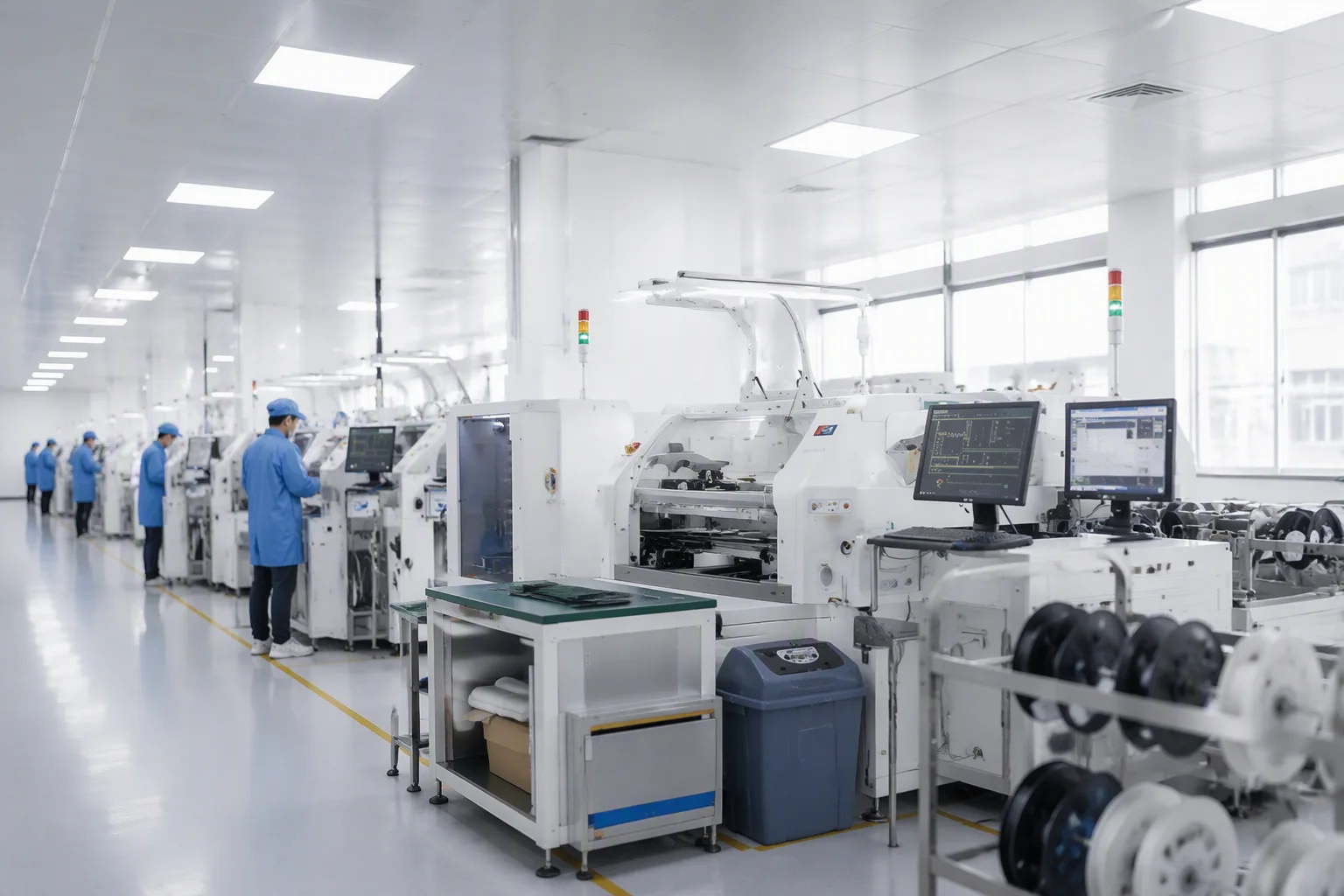
Factory & Equipment
Five zones under one roof — SMT, DIP, conformal coating, box-build assembly and a test lab — running an ESD S20.20 program across the floor, with MSD dry cabinets held below 5% RH.
3,200 m² · 4 SMT + 2 DIP lines · 3,000,000+ placements per day · 107 National Highway, Xixiang Street

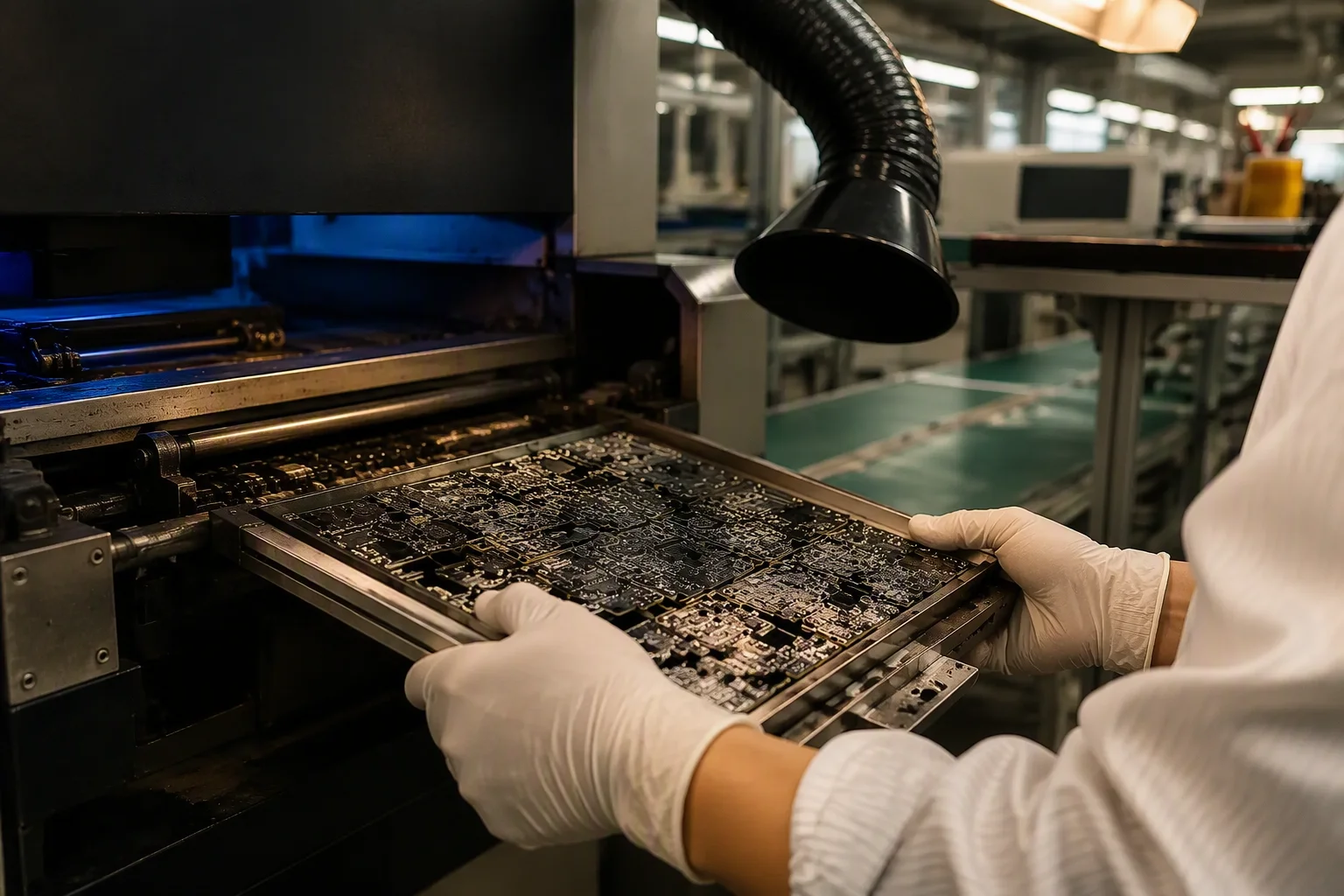
SMT room
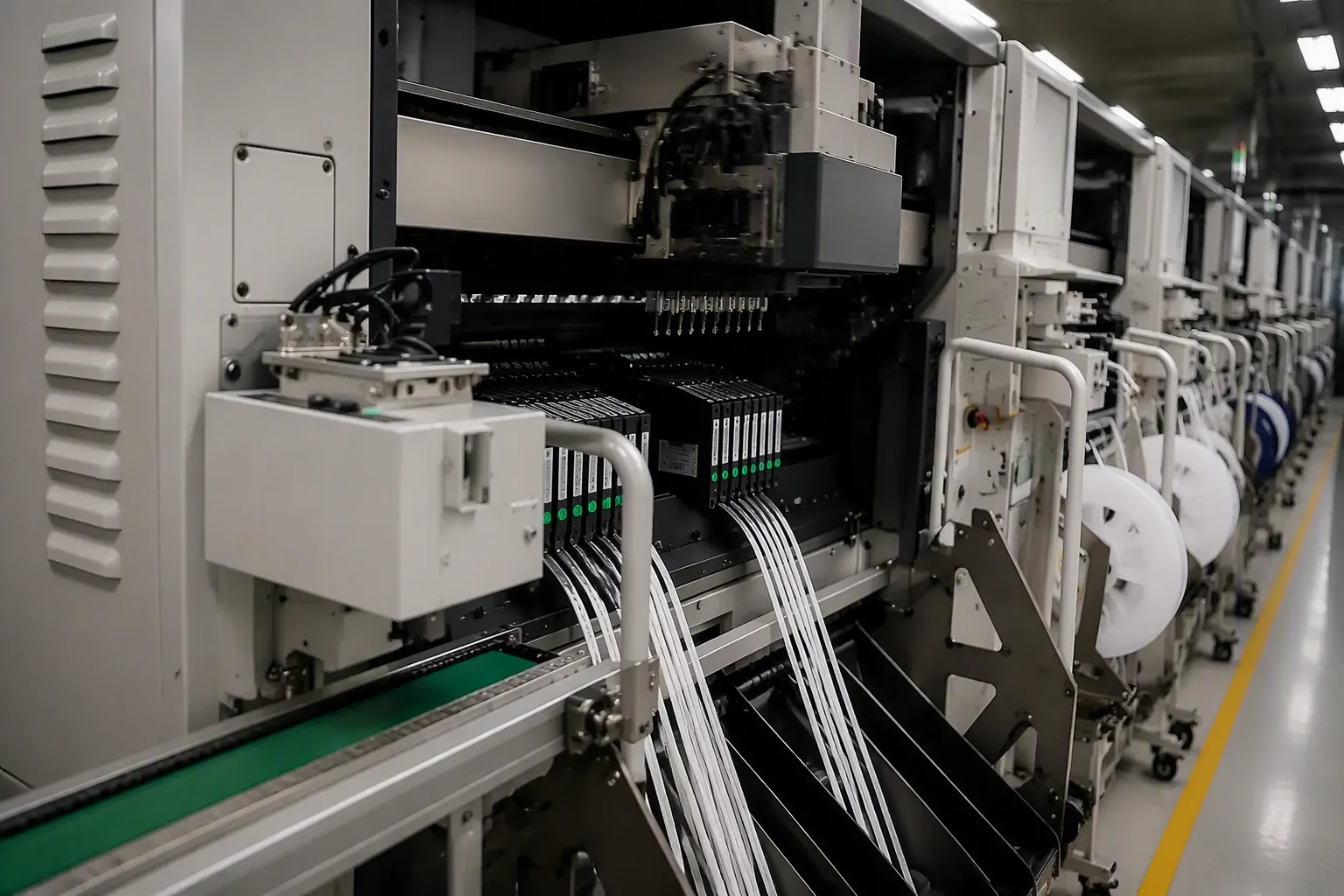
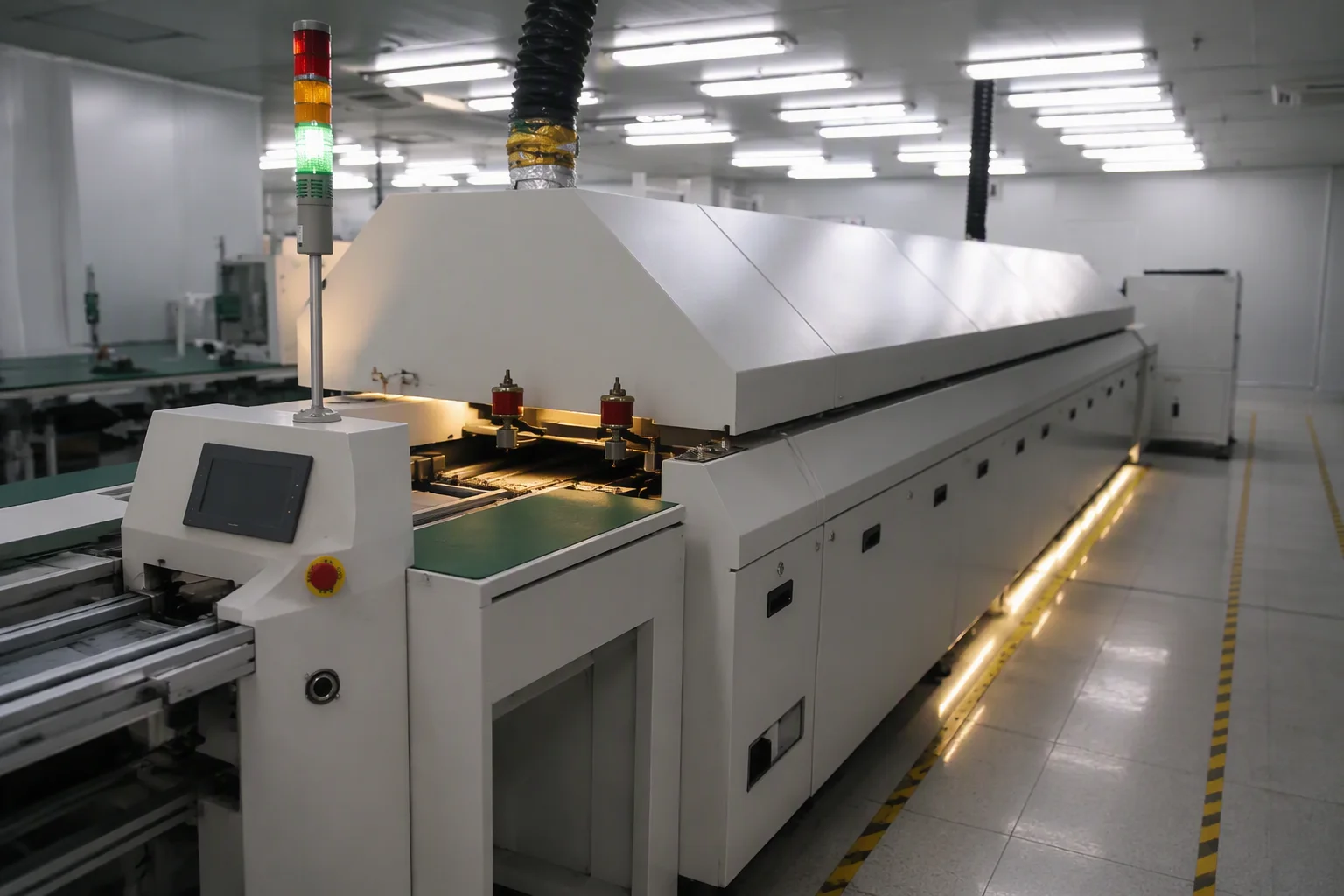
Each line pairs a fully automatic solder-paste printer with an inline SPI station and high-speed placement modules. Reflow profiles are programmed per build, peaking at 240–255 °C for lead-free assemblies.
| Equipment / parameter | Specification |
|---|---|
| SMT lines | 4, high-speed placement, 150,000+ CPH combined |
| Solder paste printing | Fully automatic printer on every line |
| Inline SPI | 100% paste inspection after printing |
| Placement accuracy | ±0.025 mm |
| Smallest passives | 01005 (0.4 × 0.2 mm) |
| BGA / QFN pitch | From 0.25 mm / from 0.3 mm |
| Reflow | Multi-zone, programmable, 240–255 °C peak |
| Board size | Up to 460 × 500 mm, single- or dual-sided |
| Stencils | Laser-cut, ±0.02 mm grade tolerance, engineering support |
| Daily throughput | 3,000,000+ placements per day at full shift |
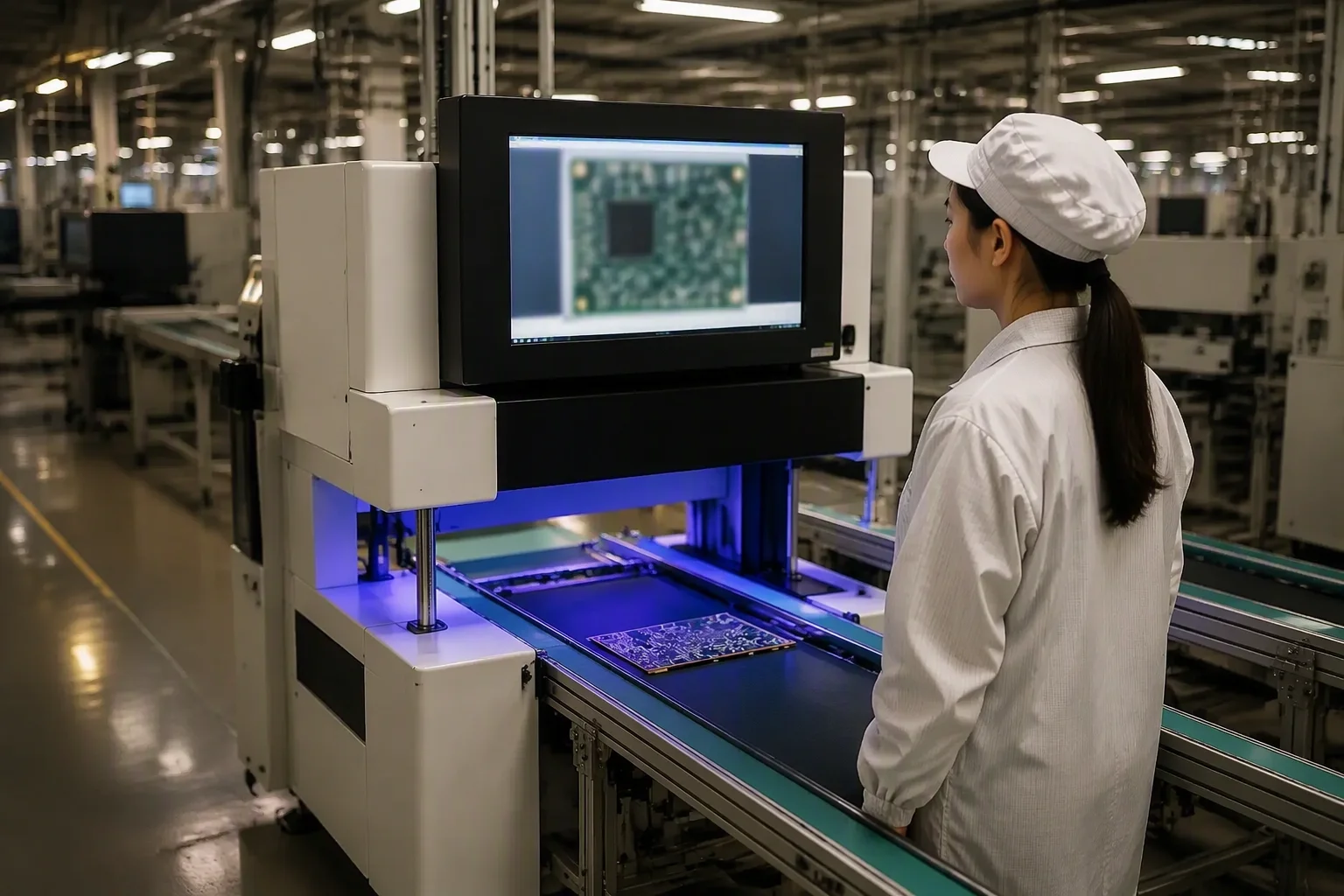
Hidden-joint control stays in the SMT room: X-ray covers 100% of BGA and QFN solder connections before boards move downstream.
DIP · Coating · Assembly
Two DIP lines, a dedicated coating station and eight box-build positions handle everything a bare board still needs.
2 lines: wave soldering for volume and selective soldering for mixed boards with heat-sensitive parts. Hand soldering follows J-STD-001.
Acrylic, silicone and urethane systems qualified to IPC-CC-830; selective spraying with masking for connectors and thermal zones; 30–130 μm typical film thickness.
8 assembly and burn-in stations with 24–168 h burn-in options, torque-controlled fastening and serial-number recording per unit.
Test lab
Goods-in → paste SPI → post-placement → AOI/X-ray → final inspection. Every gate writes into the traceability file that ships as your CoC.
| Test / inspection | Coverage & role |
|---|---|
| X-ray | 100% of BGA / QFN / LGA hidden joints |
| AOI | 100% after reflow, on every line |
| SPI | 100% after paste printing, on every line |
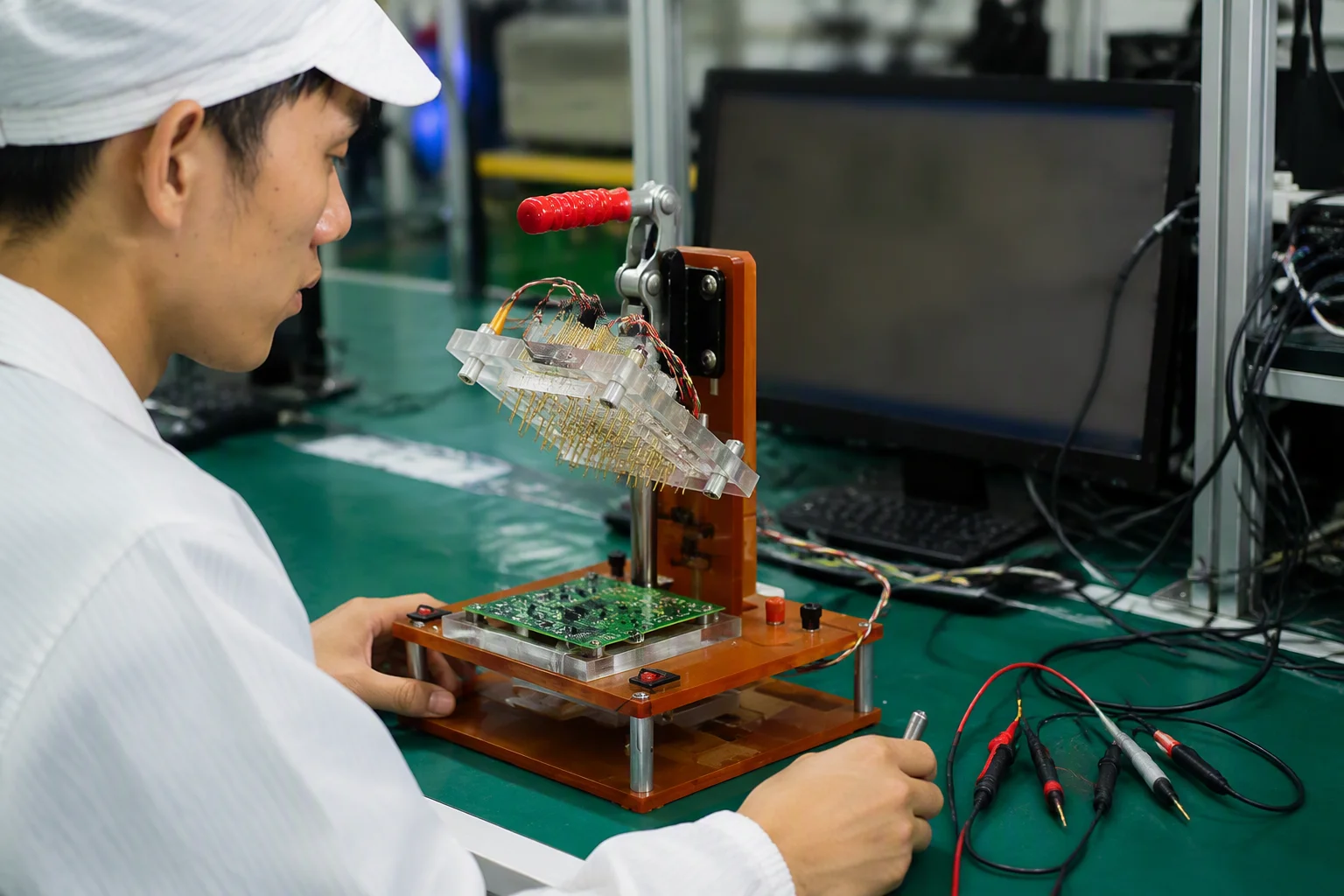
| Flying probe | Fixtureless electrical test, suited to prototypes |
| ICT | Bed-of-nails fixtures for volume repeats |
| FCT | Functional bench test to your specification |
| Goods-in inspection | Component and laminate checks against the BOM |
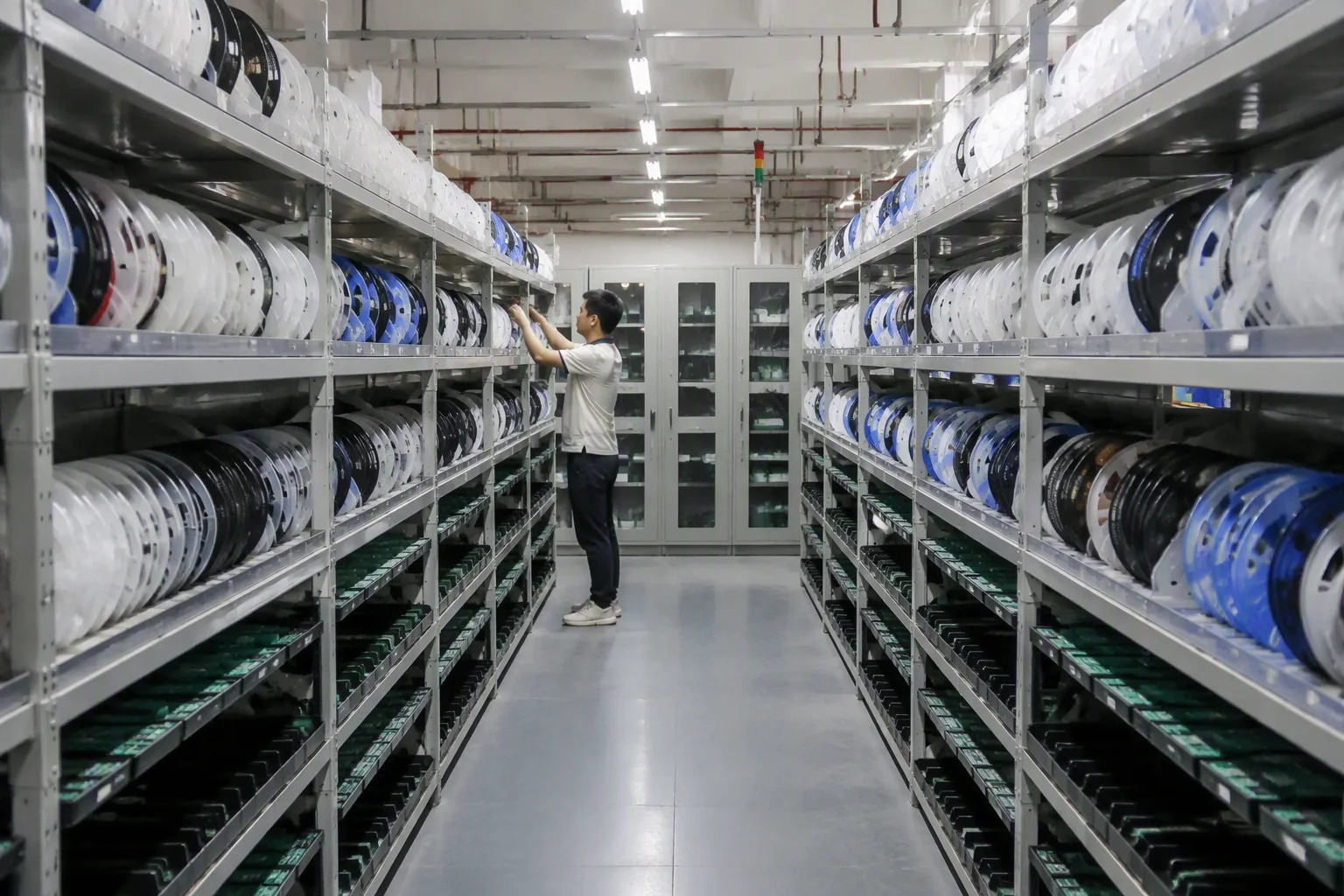
| MSD storage | Dry cabinets below 5% RH, J-STD-033 tracking |
| ESD program | ANSI/ESD S20.20 procedures, floor-wide |
| Traceability | Batch / date-code records attached to each CoC |

Inside the test lab
Final inspection happens under the microscope, not at a distance. Flying-probe and ICT fixtures are built in-house, so prototype and volume builds run the same gates.
The five quality gates >Walk the floor
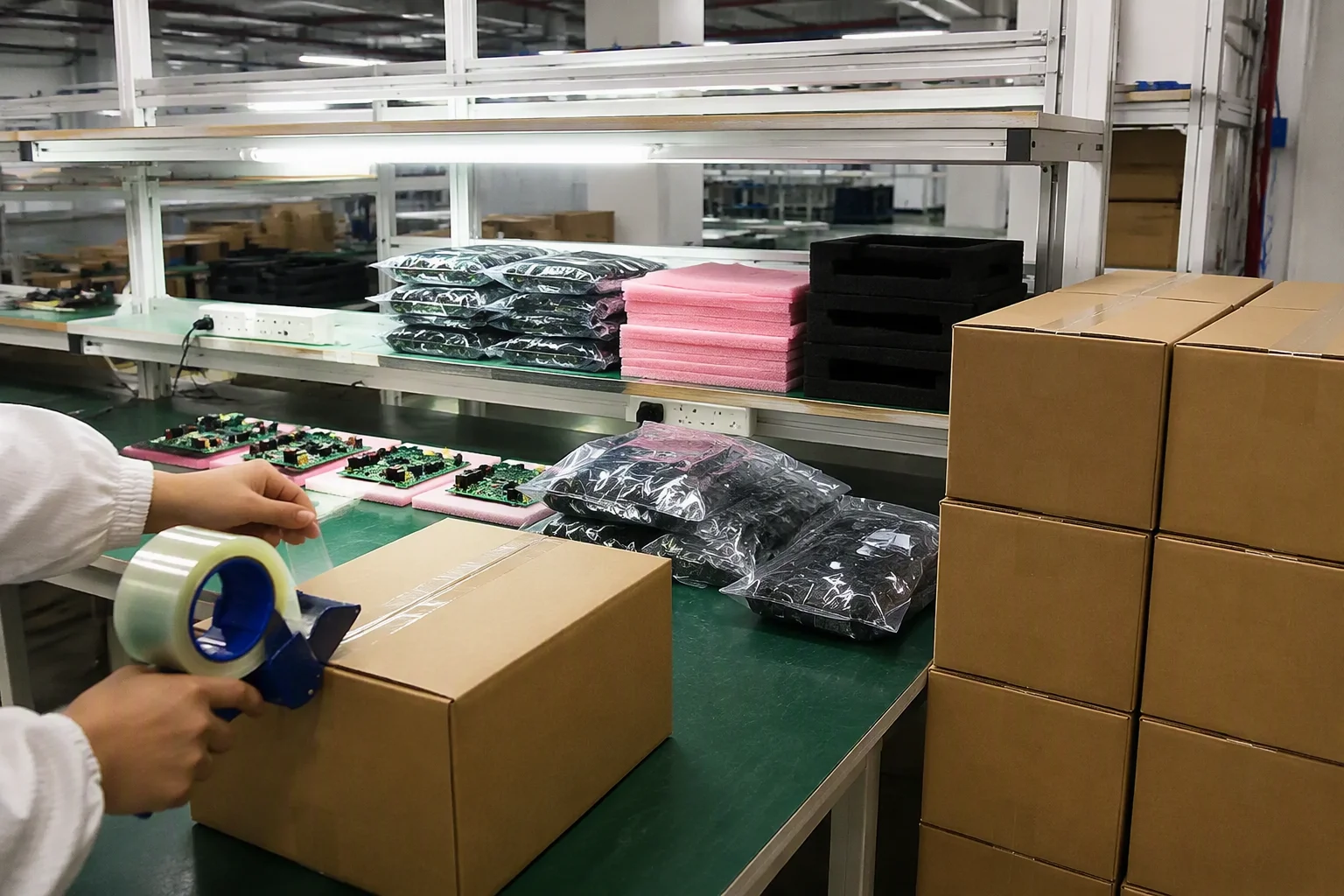
SMT, DIP, coating, test, storage and packing — photographed on the floor at 107 National Highway, no stock imagery.
Audit us
On-site audits and video audits are welcome — book 3 working days ahead. Equipment list PDFs and completed audit questionnaires are available on request.
An audit visit covers the full route: goods-in, the SMT room, both DIP lines, the coating station, the burn-in benches and the test lab — five zones, five quality gates, with certificate copies (ISO 9001:2015, ISO 14001:2015), an ESD S20.20 program walkthrough and a completed audit questionnaire. Video audits follow the same route live; NDA signed before the first camera is on.