
Capabilities · Box-Build
Box-build assembly, from PCBA to packed product
Five integration levels on one build record: 8 assembly and burn-in cells, IPC-CC-830 conformal coating, 100% functional test and a serial number on every unit before it is packed for export.
Integration levels L1–L5
Five levels, one build record
You choose the level where we stop — the traceability and document pack stay the same from L1 to L5.
| Level | Scope | What it includes |
|---|---|---|
| L1 — assembled PCBA | Tested board, ready for your housing | SMT + DIP build, AOI/X-ray records, optional IPC-CC-830 coating, CoC |
| L2 — wired module | PCBA plus cabling in a functional module | Harness build to drawing, crimps and connectors, basic function check |
| L3 — housed semi-finished unit | Module mounted in enclosure | Sub-panels, display modules, gaskets, torque-documented fastening |
| L4 — complete product | Fully functional finished unit | Firmware flashed, 100% FCT against your limits, optional burn-in window |
| L5 — packed finished goods | Shippable, serial-numbered units | Serial linked to PCBA batch, retail or export packaging |
| Assembly cells | 8 box-build assembly and burn-in stations | Dedicated benches with ESD control under the S20.20 program |
| Fastening | Torque-controlled assembly | Calibrated tools; per-screw values recorded in the unit build record |
| Serial traceability | Unit serial linked to PCBA batch | Component lot and date codes linked for UDI and customer audits |
| Box-build lead time | From 10–20 working days | Confirmed at quote, scaled to BOM complexity and coating scope |
| Order size | MOQ 1 pc | Prototype through 100,000+ pc volume on the same cells |
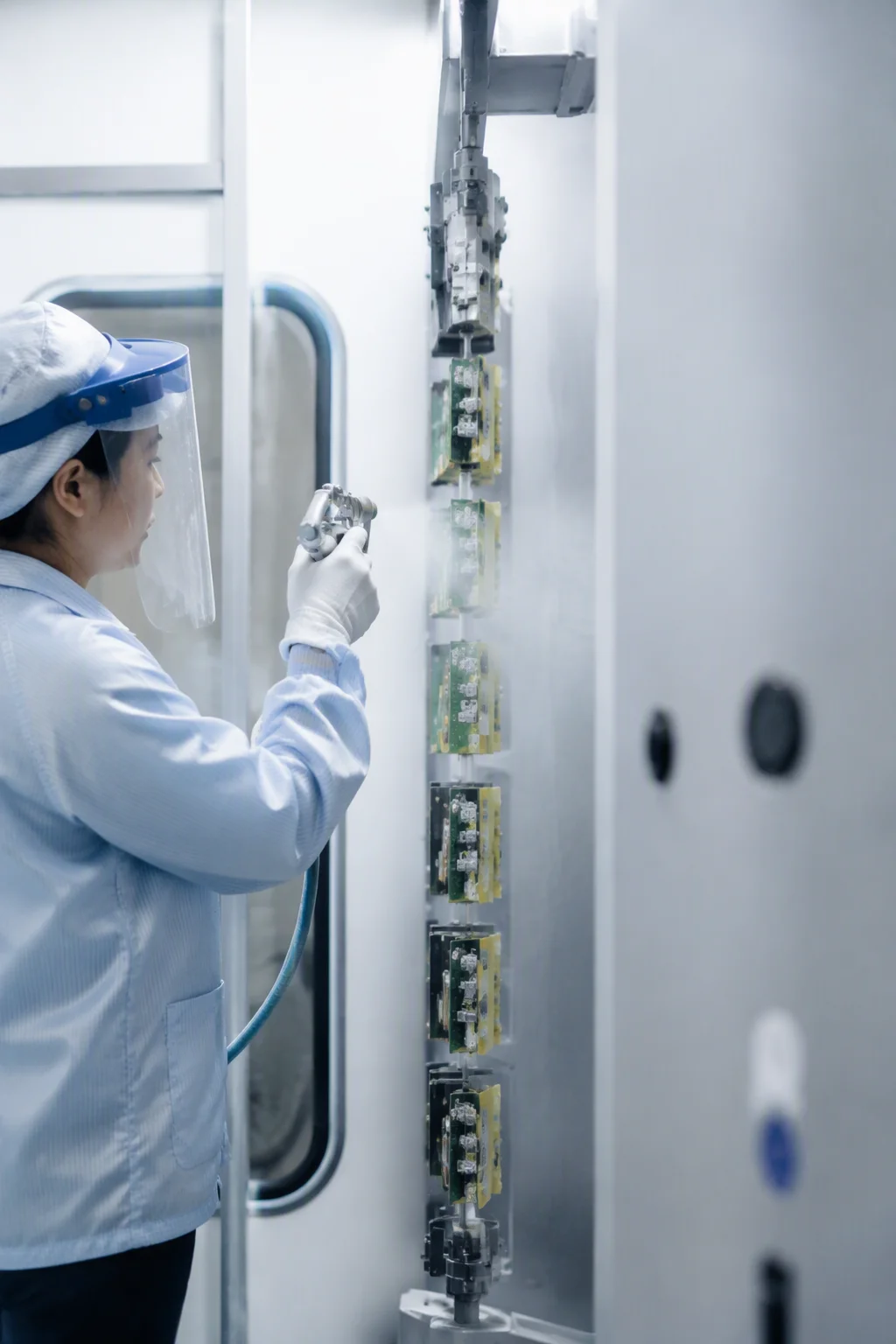
Conformal coating · IPC-CC-830
Coated before it ever ships
Coating is applied in a dedicated, ventilated booth as a controlled process step — not an afterthought at the packing bench.
Three qualified material systems
Acrylic, silicone and polyurethane, selected against chemistry exposure, flexibility and rework needs — materials qualified to IPC-CC-830.
30–130 μm typical thickness
Target thickness is set by material and protection class and verified per batch, so the number in the spec sheet is the number on the board.
Selective coating with masking
Connectors, gold fingers, heatsink and RF zones are masked or kept out of the spray path; coating goes where it protects, not where it interferes.
Drawing approval before first article
Send your keep-out zones with the RFQ — we return a coating drawing for sign-off before the first board is built.
Cables, enclosures & mechanics
Mechanics, built to the print
From L2 upward, mechanical integration runs in the same cells as electrical build — one traveler, one record.
Cable & harness build
Harnesses are built to your drawing, or we propose routing for review. Terminations are hand-soldered to J-STD-001 and crimps follow the drawing spec, with continuity checked before integration.
Enclosure & module assembly
Sub-panels, displays, gaskets and sheet-metal or plastic housings are fitted across 8 assembly cells. L3+ builds get full mechanical integration with fit checks at each step.
Torque-controlled fastening
Fasteners are driven with calibrated torque tools and the per-screw values are recorded in the unit build record. Thermal pads and pressure-sensitive parts are fitted to the print, not to feel.
Test & burn-in
Tested, burned in, then packed
No unit is packed on trust: every L4+ build passes functional test, and the burn-in window you specify runs before final inspection.
Firmware & configuration
Firmware is flashed and configuration files loaded at the L4 stage, with version and checksum logged per serial number.
You provide: signed firmware images, config files and the flash procedure.
100% functional test (FCT)
Every unit is powered and tested against your functional test plan at our bench fixtures; results are stored against the serial.
You provide: the test procedure, pass/fail limits and any custom fixture requirements.
Burn-in 24–168 h
Optional powered soak from 24 to 168 hours with periodic function polls — early-life failures are caught before they reach your customer.
You provide: the burn-in profile, dwell time and acceptance criteria.
Final inspection & pack
Cosmetic criteria, accessory counts and label placement are checked against your packing spec before units are bagged and cartoned.
You provide: the packing spec, label artwork and accessory list.
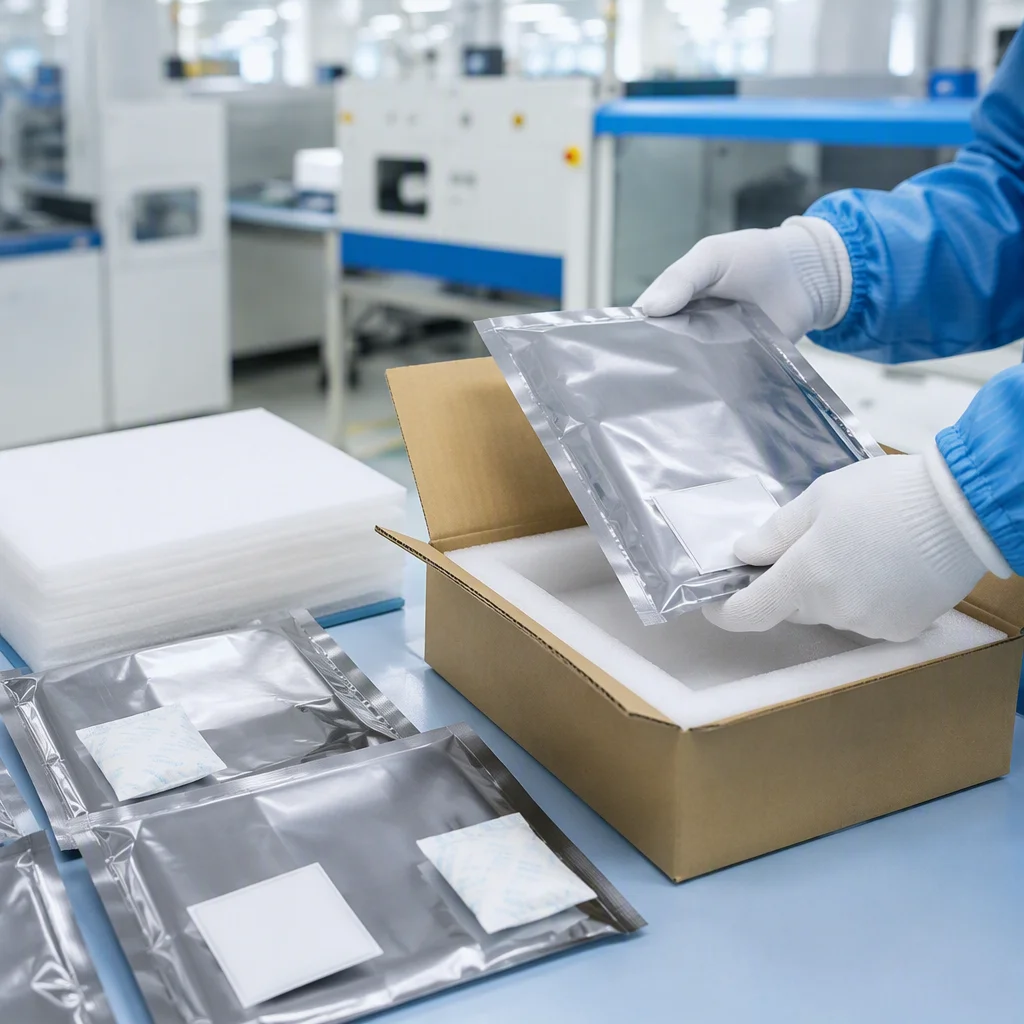
Traceability & packing
Every unit says where it came from
Packing is a documented step: what goes in the carton is recorded, and the record travels with the shipment.
Serial-linked traceability
The unit serial is tied to its PCBA batch and component date codes — the chain auditors and UDI programs ask for, ready to export.
Retail-ready or plain
Your retail cartons, inserts and labels are used as supplied, or sourced locally against your spec for L5 builds.
Export packing standard
ESD shielding bag + desiccant + humidity indicator card + export carton on every order; sea-freight builds get an added moisture plan for the 30–45 day transit.